False ceiling design has moved beyond heavy patterns. The most effective ceilings now support lighting, air-conditioning, fan placement and room proportion in a clean architectural way.
Curves are softer when used with purpose
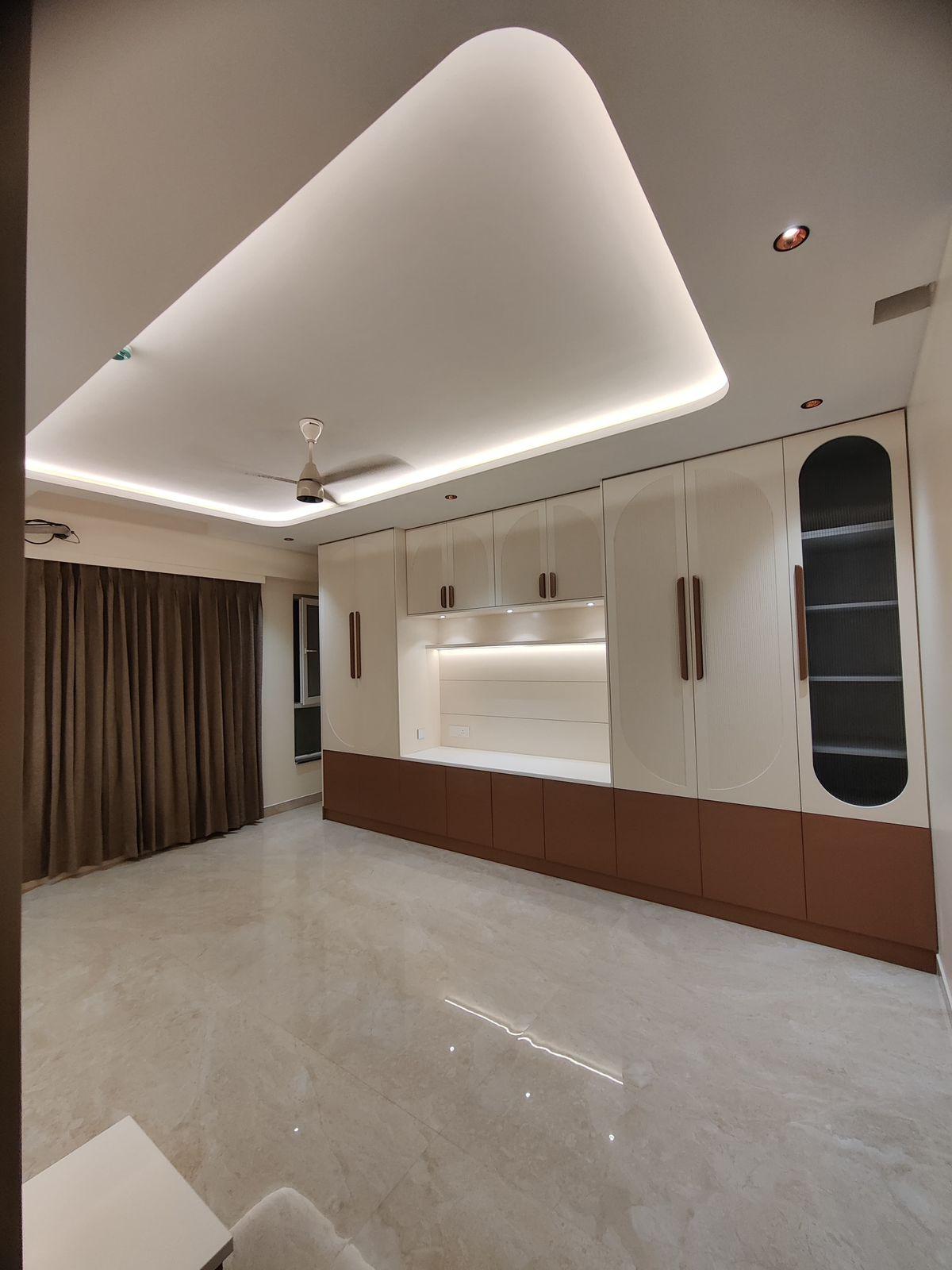
Curved ceilings can make halls and corridors feel more fluid, but they should follow the room layout. Random curves often feel decorative and dated.
A premium ceiling design aligns with furniture, walls and lighting points.
Coordinate services early
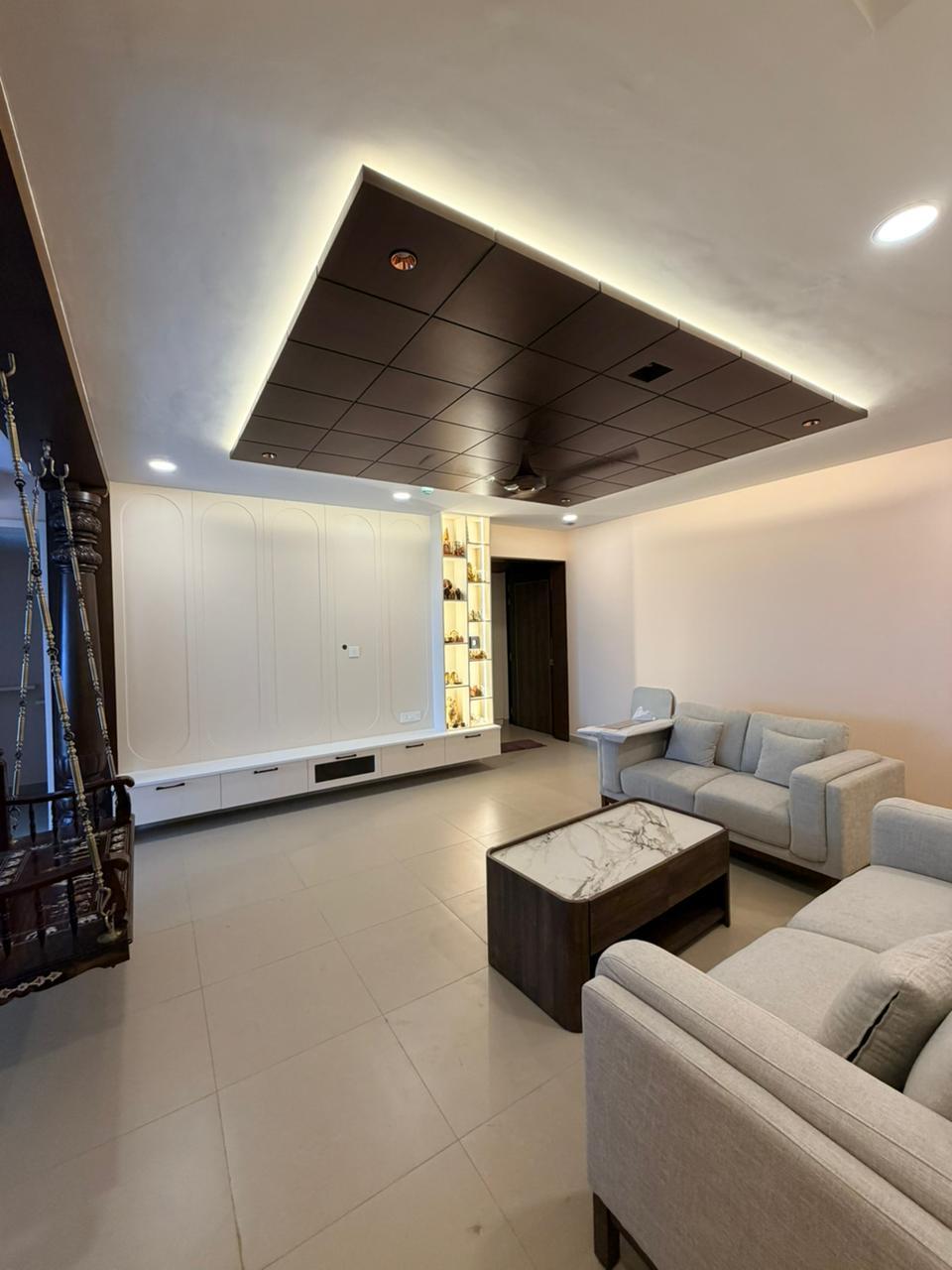
AC vents, fans, lights, speakers and curtain tracks should be planned before the ceiling is built.
Wood ceilings add warmth
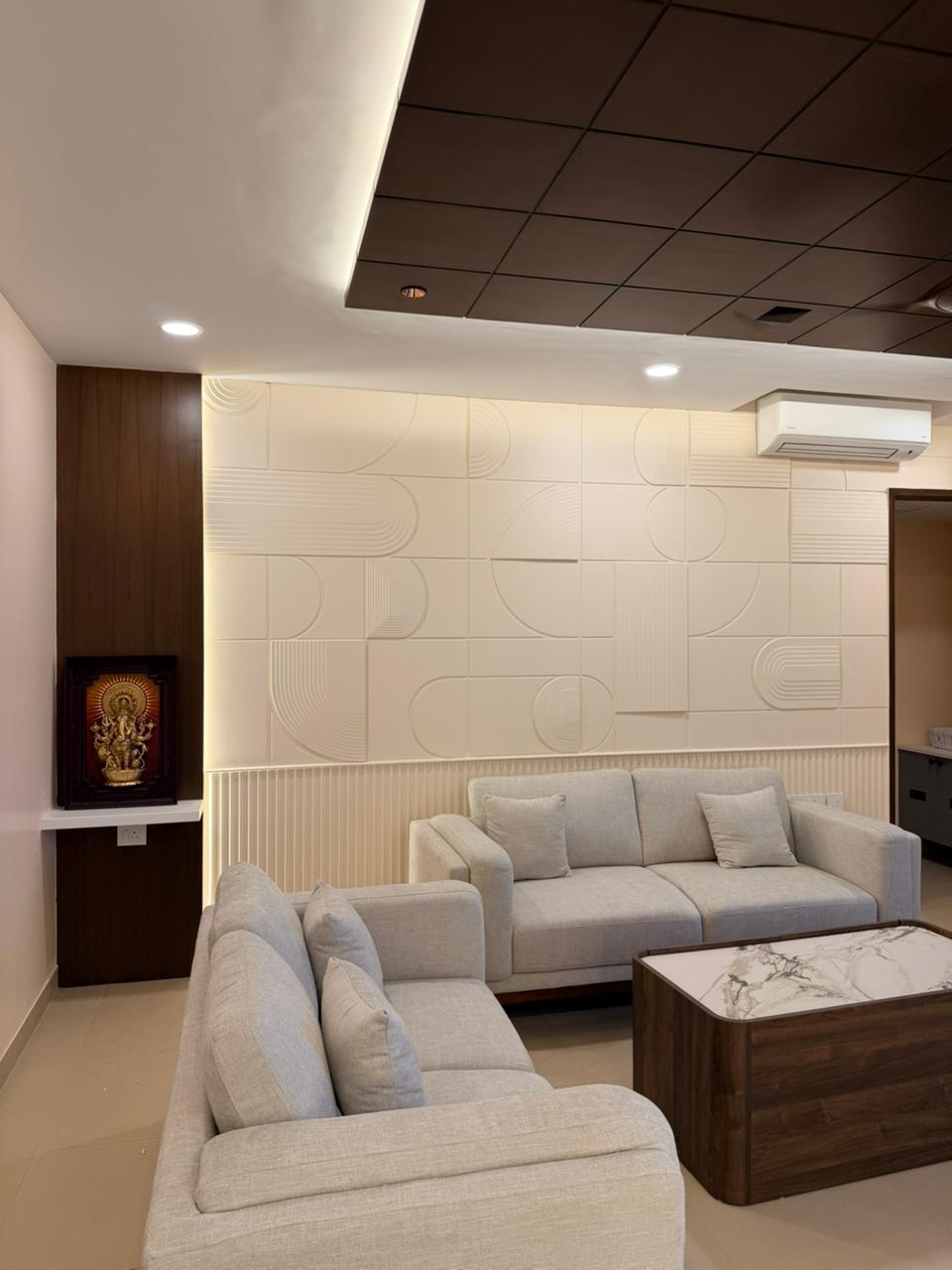
Timber or wood-look ceilings can make living and dining rooms feel grounded. They work best when paired with neutral walls and simple lighting.
In Chennai homes, material selection should consider heat, maintenance and installation quality.
Layered lighting creates depth
Recessed lights, profile lights and wall washers can be combined to create different moods. The goal is comfort, not brightness everywhere.
Bedrooms often need softer lighting than living rooms, while kitchens need focused task lighting.
FAQs
Is a false ceiling necessary in every room?
No. It is useful when it improves lighting, hides services or corrects proportion. Some rooms can remain simpler.
Which false ceiling style looks premium?
Clean lines, subtle curves, recessed lighting and restrained material use usually look more premium than heavy patterns.
Can false ceiling design affect room height?
Yes. Poorly planned ceilings can make rooms feel low, so proportions should be studied carefully.